Your SaaS product is live in 30 countries. Your website is translated into 8 languages. Your support team handles tickets in Spanish, German, and Japanese. But your product demos? They are still only in English.
This is the reality for most global SaaS companies. And it is costing them deals. Research consistently shows that buyers prefer, and often require, content in their native language before making a purchase decision. Yet creating multilingual demo videos has historically been so expensive and time-consuming that most teams simply do not bother.
That is changing. This guide covers everything you need to know about creating multilingual product demos that resonate with global audiences: from the business case for localization, to practical strategies for choosing languages, to the AI-powered tools that make it feasible at any scale.
Why Localization Matters: The Numbers Tell the Story
The data on language preferences in B2B buying decisions is striking:
- 75% of consumers prefer to buy products when information is available in their native language (Common Sense Advisory)
- 40% of consumers will never buy from websites that are not in their language
- 56% of consumers say the ability to get information in their own language is more important than price
- Companies that localize their content see 1.5x higher conversion rates in non-English markets
These statistics apply to all content types, but they are especially impactful for product demos. A demo video is often the most persuasive piece of content in your marketing funnel. It is where a prospect goes from "this looks interesting" to "I want to try this." If that critical moment happens in a language the prospect is not fully comfortable with, you introduce friction at the worst possible point in the buyer journey.
A product demo is the closest thing to a first-hand experience before a trial. If your prospect has to mentally translate the narration while trying to evaluate your product, you are making their decision harder, not easier.
The Competitive Advantage
Here is the opportunity most SaaS teams are missing: because multilingual demos have been so hard to produce, very few companies actually have them. If you are competing for a deal in Germany, Brazil, or Japan, and you are the only vendor with a demo in the buyer's native language, that is a significant differentiator. You are not just localizing; you are showing respect for the buyer's context and removing barriers to understanding.
The Traditional Approach: Why It Costs $2K-5K Per Language
To understand why multilingual demos are rare, look at what the traditional process involves:
Step 1: Translation
You send your demo script to a professional translator. For a 2-minute demo script, expect to pay $150-300 per language for a quality translation, plus 3-5 business days turnaround time. Machine translation is cheaper but produces awkward phrasing that undermines credibility. This is especially problematic when the translated text becomes voiceover narration.
Step 2: Voiceover Recording
You hire a native-speaking voice actor for each language. Professional voiceover talent charges $300-800 per finished minute of audio, depending on the language and the actor's experience. You also need to coordinate recording sessions, provide pronunciation guidance for product-specific terminology, and handle revisions.
Step 3: Re-Editing
Different languages have different speaking rates. German narration often runs 15-20% longer than English. Japanese can be more concise. This means your video timing no longer matches the voiceover. A video editor needs to adjust pacing, re-sync visual transitions, and potentially re-cut sections. Budget $200-500 per language for editing.
Step 4: Caption Translation
If your demo includes on-screen captions (it should), those need to be translated and re-timed as well. Add another $100-200 per language.
Step 5: Quality Assurance
A native speaker needs to review the final video to catch pronunciation errors, awkward phrasing, or cultural missteps. This is non-negotiable: a poorly localized demo is worse than no localized demo at all.
Total cost per language: $2,000 to $5,000, with a turnaround time of 2-4 weeks. For a company targeting 5 languages, that is $10,000-25,000 and 1-2 months just for one set of demo videos. Every time your product UI changes, the clock and the meter start over.
The AI-Powered Approach to Multilingual Demos
AI has fundamentally changed the economics and logistics of multilingual content creation. Here is how the modern approach works:
AI Translation
Modern AI translation has crossed a quality threshold that makes it viable for professional content. Large language models trained on billions of multilingual examples produce translations that are natural, contextually appropriate, and far superior to the phrase-by-phrase machine translation of previous generations. For product demo scripts, which tend to be clear, structured, and relatively short, AI translation quality is now comparable to professional human translators in most language pairs.
AI Voiceover
AI voice synthesis has made extraordinary progress. Today's AI voices sound natural, expressive, and human. They handle pacing, emphasis, and emotion in ways that would have been impossible just two years ago. Crucially, the underlying AI demo agent works across languages from a single source: you generate the English demo, and the same tool produces voiceover in Spanish, French, German, Portuguese, Arabic, Hindi, Japanese, Korean, Chinese, Turkish, Russian, Dutch, Polish, Vietnamese, and 14 more.
Automatic Caption Translation
Dynamic captions can be generated and translated in real-time, eliminating the manual captioning and timing workflow entirely. The AI matches caption timing to the voiceover in each language, so everything stays synchronized regardless of speaking rate differences.
The Result
What used to take $2,000-5,000 and 2-4 weeks per language now takes minutes and costs a fraction of the price. A single demo can be generated in 29 languages in less time than it takes to brief a human translator on a single version.
How to Choose Which Languages to Prioritize
Even with AI making multilingual demos dramatically easier, you should be strategic about which languages you support first. Not every market needs a localized demo on day one. Here is a framework for prioritizing:
Tier 1: Must-Have Languages
Start with languages where you already have meaningful traffic, signups, or revenue from non-English markets. Check your analytics for:
- Website traffic by country/language: Which non-English locales are already visiting your site?
- Signup data: Where are your non-English users concentrated?
- Support ticket languages: If your support team regularly handles tickets in a specific language, those users would benefit from localized demos.
- Sales pipeline geography: Where are your open deals? If your sales team is working opportunities in Germany, a German demo is a quick win.
Tier 2: Strategic Growth Languages
These are languages for markets you want to enter or expand into. Even if current traffic is low, a localized demo can be the catalyst that opens a new market. Consider:
- Market size and SaaS maturity: Large markets with high SaaS adoption (Germany, Japan, France, Brazil) typically justify early localization.
- Competitive landscape: If competitors are already localized in a specific language, you need to match them. If they are not, this is your chance to get there first.
- Regulatory or cultural requirements: Some markets (France, Quebec, parts of LATAM) have strong preferences or even legal requirements for local-language content.
Tier 3: Long-Tail Languages
Once your Tier 1 and 2 languages are covered, expand into languages where you have emerging interest. The beauty of AI-powered localization is that the incremental cost of adding another language is minimal, so the threshold for "is this worth it?" drops significantly.
A Practical Starting Point
For most global SaaS companies, a strong starting set includes:
- English (your base)
- Spanish (500M+ speakers, critical for LATAM and Spain)
- French (strong in Europe, Africa, and Canada)
- German (largest economy in Europe, high SaaS adoption)
- Portuguese (essential for the Brazilian market)
- Japanese (third-largest economy, strong enterprise buying)
This covers the majority of global B2B software spending and gives you a strong foundation to build on.
Beyond Translation: Adapting Demos Across Cultures
True localization goes far beyond translating words from one language to another. The most effective multilingual demos adapt to cultural context in ways that make the viewer feel like the content was created specifically for them. Here are the key dimensions to consider:
Data and Examples
If your demo shows sample data (company names, currency amounts, dates, phone numbers), these should reflect the target market. A demo for the German market should show European date formats (DD.MM.YYYY), Euro currency, and German company names. A demo for Japan should show Yen amounts and Japanese business conventions.
This level of detail signals to the viewer that you understand their market. It may seem like a small thing, but it builds trust and removes the feeling of "this was not really built for me."
Use Cases and Scenarios
The problems you highlight and the scenarios you demonstrate may need to vary by market. A project management tool demo for the US market might emphasize cross-timezone collaboration. The same tool demoed for the Japanese market might emphasize detailed reporting and approval workflows, which are more culturally relevant.
Visual and Design Considerations
Some visual choices carry different connotations across cultures:
- Color meaning: Red signifies danger in Western markets but luck and prosperity in China.
- Text direction: Arabic and Hebrew read right-to-left, which affects caption placement and UI flow.
- Imagery: Ensure any illustrations, photos, or avatars in your demo reflect the diversity of your target market.
Tone and Formality
The appropriate tone for a demo varies significantly by culture. American demos tend to be casual and enthusiastic. German business culture favors precision and professionalism. Japanese audiences expect a more formal, respectful tone. Your voiceover script should adapt accordingly, not just in vocabulary, but in overall approach.
How Demosmith Handles Multilingual Demo Creation
Demosmith was built from the ground up to make multilingual demos effortless. Here is how the platform handles each aspect of localization:
AI Voiceover in 29 Languages
Demosmith's AI voiceover engine supports 29 languages out of the box: Arabic, Bulgarian, Chinese, Croatian, Czech, Danish, Dutch, English, Filipino, Finnish, French, German, Greek, Hindi, Indonesian, Italian, Japanese, Korean, Malay, Polish, Portuguese, Romanian, Russian, Slovak, Spanish, Swedish, Turkish, Ukrainian, and Vietnamese. When you generate a demo, you can select the target language and the voiceover is produced in a natural, native-sounding voice. There is no need to record separate voiceover tracks or hire voice actors: the AI handles pronunciation, pacing, and intonation natively for each language.
Auto-Translated Dynamic Captions
Captions are generated and translated automatically, synchronized to the voiceover timing in each language. This means your German demo has German captions that match the German voiceover, with correct timing despite the different speaking rate compared to the English version.
One Demo, Many Languages
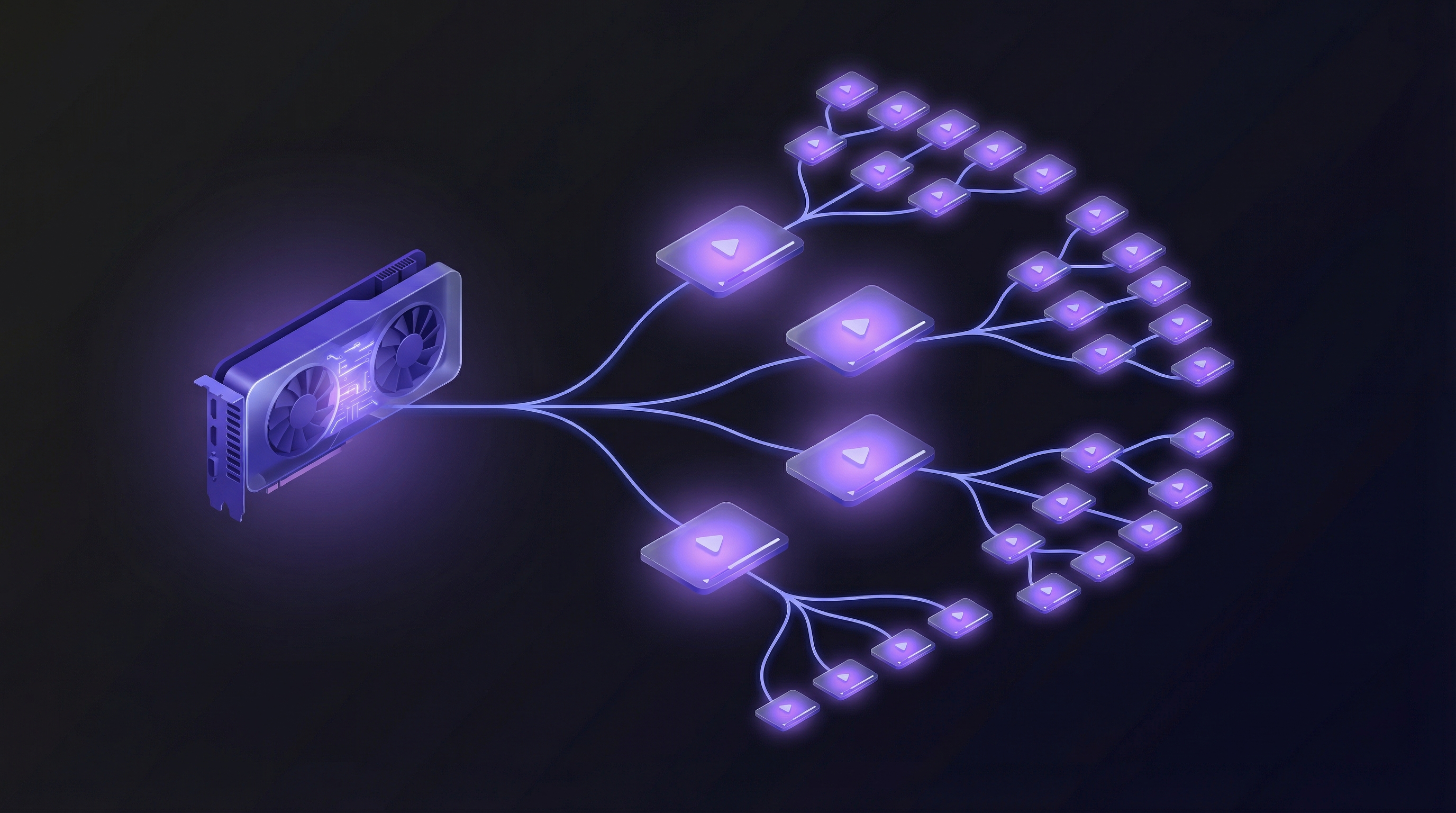
The workflow is simple: create your demo once in your base language, then generate versions in additional languages with a few clicks. The visual capture, the screen recording of your product, stays the same, while the voiceover and captions adapt. This means a single demo session can produce localized versions for every market you serve, which is exactly how teams use Demosmith for localization: one product run, 29 languages.
Brand Consistency Across Languages
Your brand kit (logo, colors, fonts, intro/outro cards) applies automatically across all language versions. The German demo looks just as polished and on-brand as the English one, maintaining a consistent brand experience regardless of the viewer's language.
The ROI of Multilingual Demos
Let us put real numbers behind the business case for multilingual product demos.
The Cost Comparison
Consider a SaaS company that needs 5 demo videos localized into 5 languages:
Traditional approach:
- 5 videos x 5 languages x $3,000 average per localization = $75,000
- Turnaround time: 4-8 weeks
- Annual maintenance (quarterly updates): $75,000 x 4 = $300,000/year
AI-powered approach (with Demosmith):
- Pro plan at $99/month = $1,188/year
- Turnaround time: Same day
- Updates: Regenerate any demo in minutes whenever your product changes
The cost difference is not incremental; it is orders of magnitude. This changes multilingual demos from a luxury reserved for enterprise companies to something any SaaS team can afford.
The Revenue Impact
The revenue case is equally compelling. Consider these scenarios:
- Higher conversion in non-English markets. If localized demos improve your conversion rate by even 20% in markets that represent 30% of your traffic, the impact on revenue is substantial. For a company doing $1M ARR with 30% international traffic, a 20% conversion improvement on that segment adds $60,000 in annual revenue.
- Shorter sales cycles. When prospects can evaluate your product in their native language, they move through the funnel faster. Sales teams report 15-25% shorter cycles when localized demo content is available.
- Reduced support burden. Localized onboarding and help center demos reduce support tickets from non-English users, saving your support team time and improving customer satisfaction. For a deeper look at building this content systematically, see our guide on automating onboarding videos at scale.
The question is not whether multilingual demos are worth the investment. With AI-powered tools, the question is whether you can afford not to have them while your competitors catch on to the same opportunity.
Getting Started with Multilingual Demos
Here is a practical roadmap for rolling out multilingual product demos:
- Audit your current demo library. Identify your highest-performing demo videos, the ones driving the most views, engagement, and conversions. These are your localization priorities.
- Identify your Tier 1 languages. Use the framework above to pick 2-3 languages based on your existing international traffic and revenue data.
- Generate localized versions. Using Demosmith or another AI demo tool, create versions of your top demos in your priority languages. This should take hours, not weeks.
- Distribute strategically. Place localized demos on language-specific landing pages, in geo-targeted email campaigns, and in your localized help center.
- Measure and expand. Track engagement and conversion rates for localized demos versus English-only. Use the data to justify expanding to Tier 2 languages.
The global SaaS market is growing faster outside the English-speaking world than within it. Companies that meet international buyers where they are, with product demos in their own language, will capture a disproportionate share of that growth. The tools to do this are now accessible, affordable, and fast. The only question is how quickly you start.