Here is a number that should fundamentally change how you sell software: 88% of software buyers will not book a sales call without seeing your product first. Not your pitch deck, not your case study, not your feature comparison chart. Your actual product.
That statistic, drawn from research by Consensus, is not an outlier. It represents the culmination of a decade-long shift in how B2B buyers evaluate and purchase software. If your go-to-market strategy still leads with a "Book a Demo" button that gates the entire product experience behind a sales conversation, you are losing the vast majority of your potential pipeline before it ever materializes.
Let us explore what is driving this shift, what the data tells us about modern SaaS buyer behavior, and what you need to do about it right now.
The 88% Problem
The headline stat comes from Consensus's research on B2B buying behavior, and it aligns with a broader pattern that every SaaS company should be paying attention to. Modern software buyers have fundamentally changed how they evaluate products, and that change is permanent.
Think about your own behavior. When was the last time you signed up for a 30-minute sales call to evaluate a $50/month tool? You probably visited the website, looked for a demo video or a free trial, checked G2 reviews, asked a colleague on Slack, and made your decision before a sales rep ever knew you existed.
Your buyers are doing the same thing. The difference is that many SaaS companies have not adapted their go-to-market to match this reality.
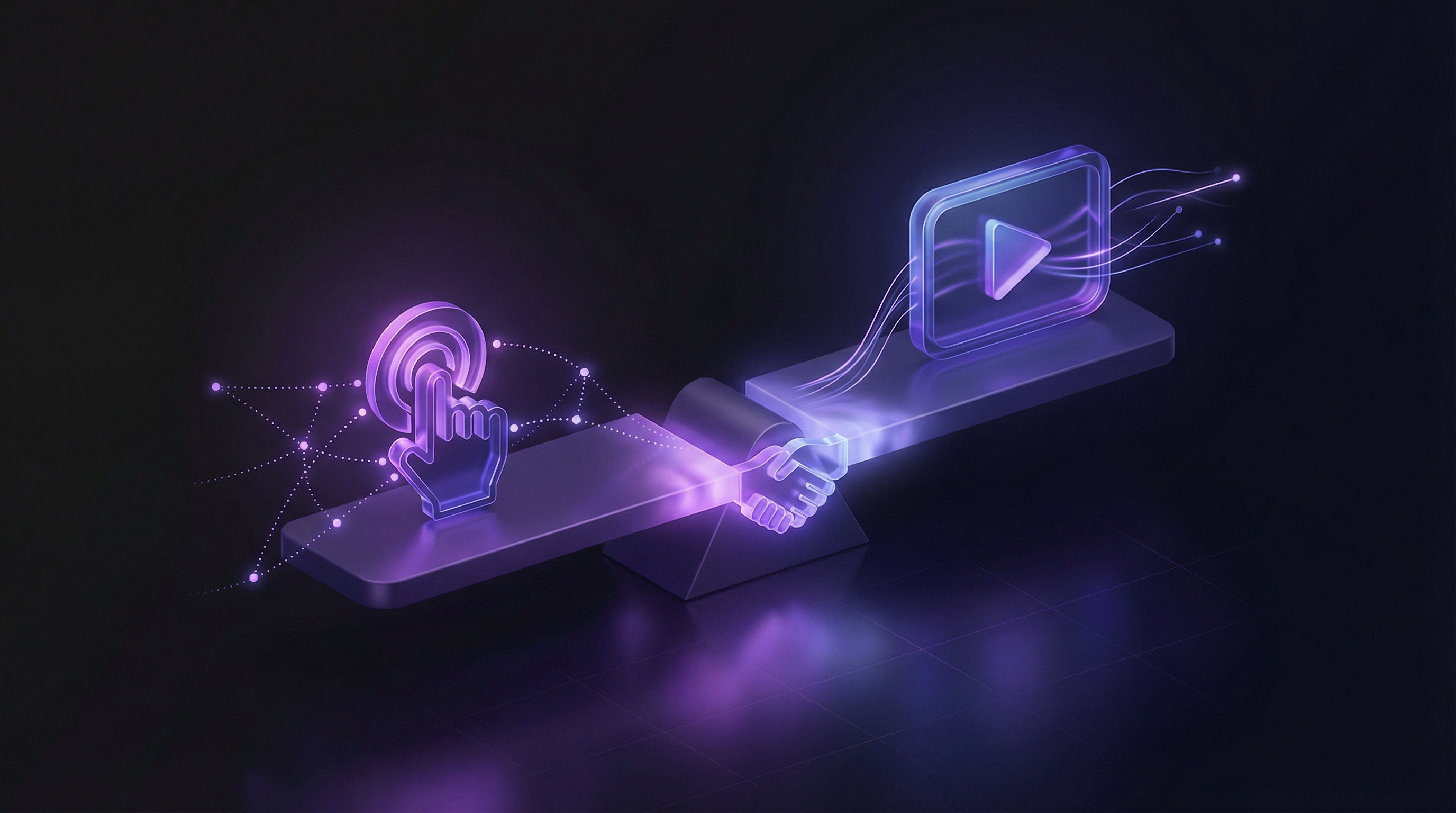
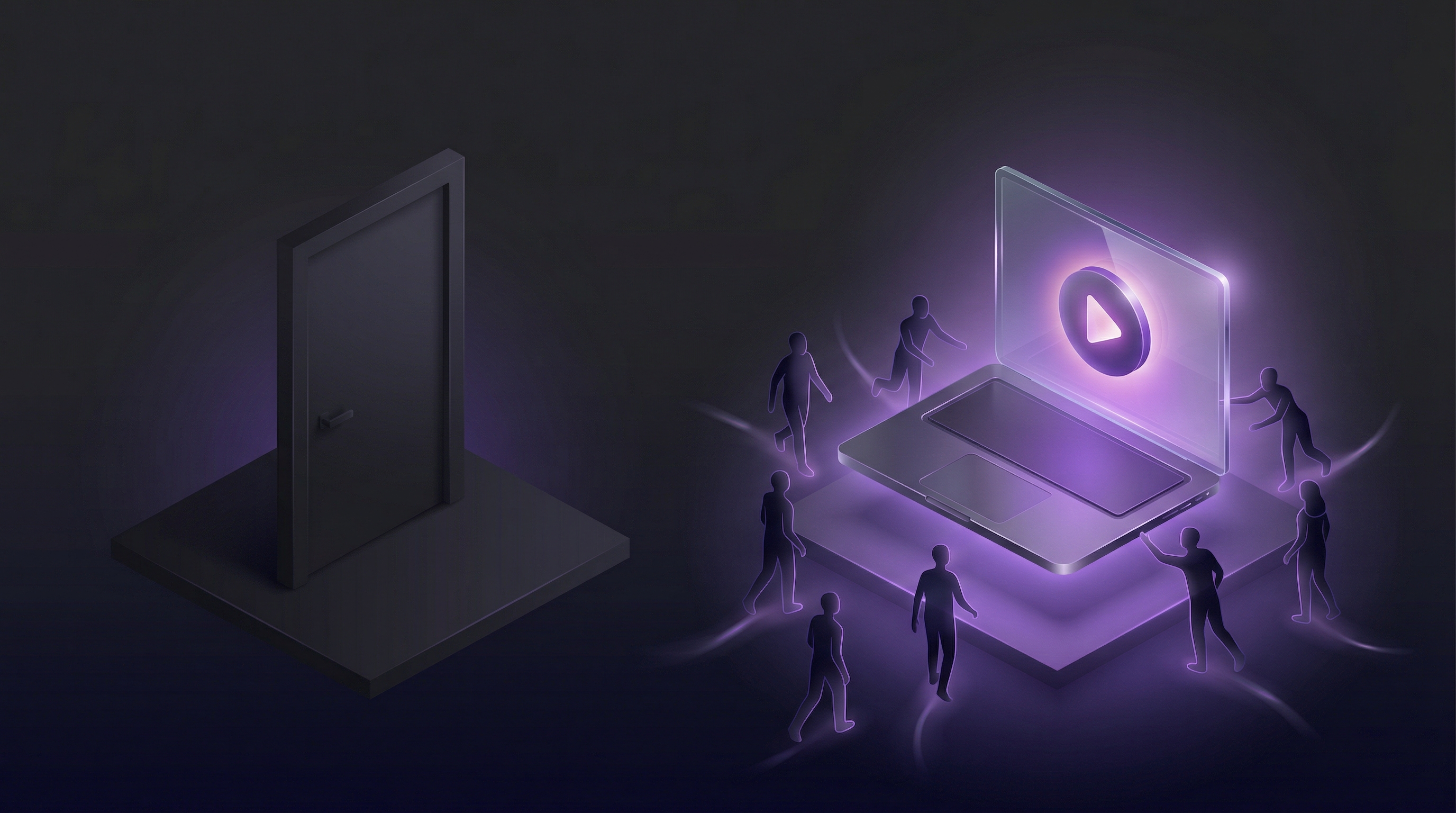
The modern B2B buyer completes 70% of their purchase journey before ever engaging with a sales representative. Demo content is no longer a sales enablement tool. It is the front door to your pipeline.
The Buyer Behavior Shift
Several converging forces have created this new reality for software purchasing.
Self-Education Is the Default
According to Gartner, B2B buyers spend only 17% of the total purchase journey meeting with potential suppliers. When they are comparing multiple vendors, the time spent with any single sales rep drops to roughly 5-6%. The rest of that time? Independent research, peer consultations, and self-guided product evaluation.
This is not a pandemic-era blip. It is a structural shift driven by information abundance. Buyers have access to comparison sites, peer review platforms, community forums, YouTube walkthroughs, and social proof that did not exist a decade ago. They do not need a sales rep to educate them. They need proof that your product works.
Distrust of Sales Pitches
There is a growing skepticism toward traditional sales-led experiences. Buyers have been burned by slick demos that show a curated version of a product, only to find the real experience falls short after they sign a contract. Forrester research suggests that 60% of B2B buyers prefer not to interact with a sales rep as their primary source of information, and that number is trending upward year over year.
What buyers want instead is transparency. They want to see the actual product, in action, doing the things they need it to do. Not a scripted walkthrough. Not a slide deck full of promises. The real thing.
The Consumerization of B2B
B2B buyers now expect the same frictionless evaluation experience they get as consumers. They do not sign up for a 45-minute call before buying a subscription to a streaming service. They do not fill out a lead form before trying a productivity app. And increasingly, they do not want to do it for enterprise software either.
This is especially true for millennial and Gen Z buyers, who now make up the majority of B2B purchasing decision-makers. These buyers grew up with self-serve, product-led experiences. They expect the same from their professional tool evaluation. Our guide on self-serve product demos covers how to give buyers what they want without a sales call.
More Stats That Prove It
The 88% figure is compelling on its own, but it is far from the only data point supporting this thesis. Here are several more product demo statistics that paint the full picture:
- 82% of buyers are more likely to purchase after watching a product demo video, according to research by Wyzowl. Demo content does not just satisfy curiosity. It directly accelerates purchase decisions.
- 50% of customers say demos are the most helpful content when making a purchase decision, ranking above case studies, white papers, and even free trials in some surveys.
- Deals that include a demo in the buying process close 50% faster than those that do not, according to Consensus data. Demos reduce the back-and-forth, answer objections proactively, and compress the sales cycle.
- 73% of B2B buyers who watch a demo video are more likely to convert than those who only interact with static content like PDFs and slide decks.
- Product pages with embedded demos see 2-3x higher conversion rates compared to those with only screenshots and feature descriptions.
The pattern is unmistakable. Demo content is not a nice-to-have. It is the single highest-impact content type for driving software purchasing decisions.
Demos Are No Longer Optional. They Are Infrastructure.
Most SaaS companies still treat demo content as a sales enablement artifact. Something the sales team uses during calls. Something marketing creates once a quarter for a product launch. Something that sits in a Google Drive folder gathering dust.
That model is broken. Given what we know about buyer behavior, demo content needs to be treated as core go-to-market infrastructure, on par with your website, your pricing page, and your onboarding flow.
Consider the implications:
- Your homepage visitor wants to see your product in action within 30 seconds of landing on your site. If they cannot, they bounce. And they probably visit a competitor who does show their product.
- Your email subscriber is far more likely to click through to a demo video than a blog post or a case study. Demo content in email sequences can increase click-through rates by 200-300%.
- Your trial user needs contextual demos that show them how to accomplish their specific goals. Not a generic product tour. A demo of the exact workflow they care about.
- Your expansion target needs demos of features they have not yet adopted. You cannot upsell what you cannot show.
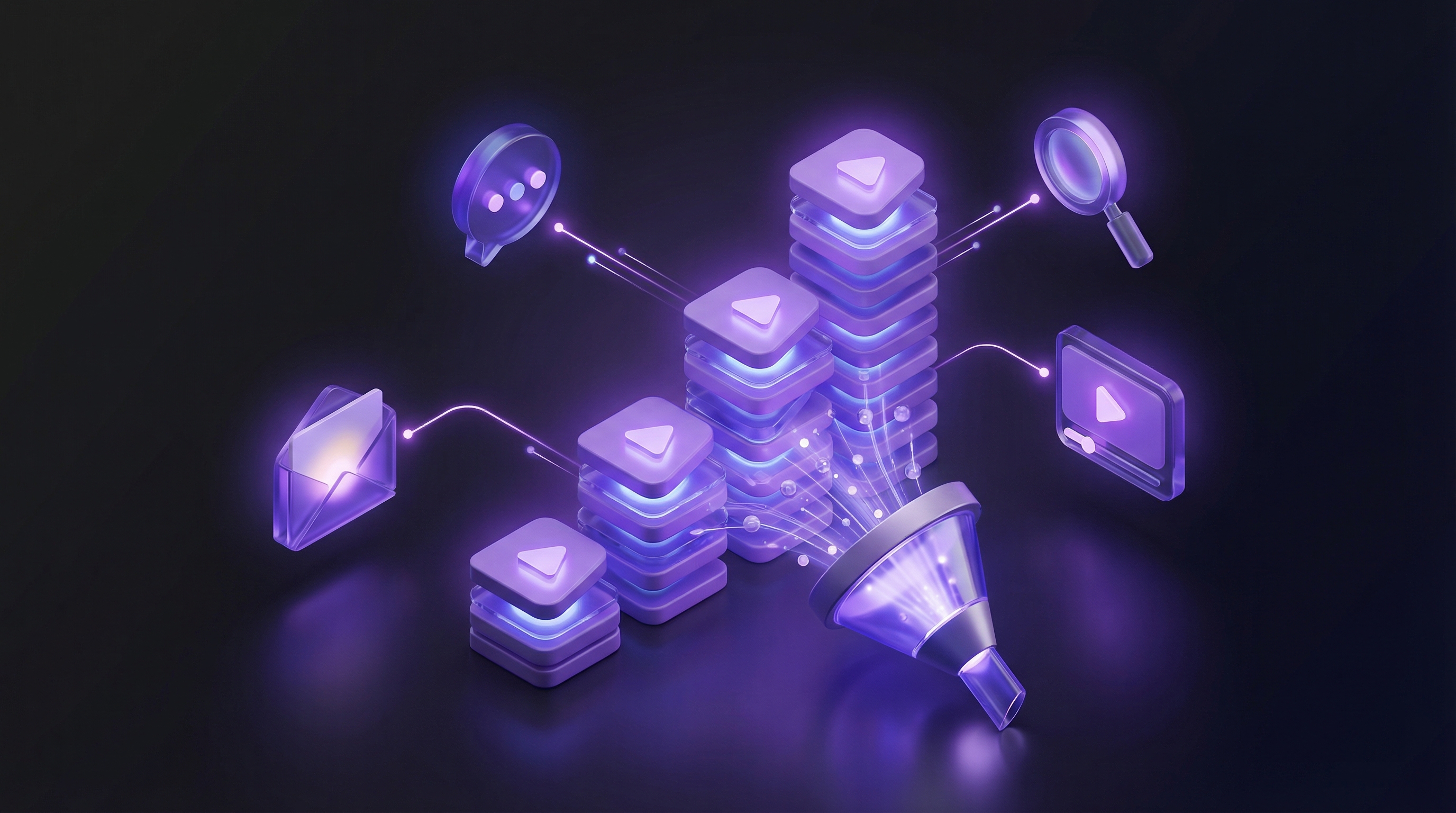
Every stage of the buyer journey, from first touch to renewal, benefits from demo content. And that means you need a lot of it.
The Always-On Demo Strategy
The most effective SaaS companies are moving toward what we call an "always-on demo" strategy. Instead of demos being something that happens during a scheduled meeting, demo content is available everywhere, all the time, without friction.
Here is what that looks like in practice:
On Your Homepage
Your homepage should have a demo video above the fold or within one scroll. Not a 15-minute walkthrough. A 60-90 second overview that shows the core value proposition in action. This single addition can increase homepage conversion rates by 30-50%.
In Your Email Sequences
Every nurture sequence, onboarding email, and re-engagement campaign should include demo content. A short video showing the specific feature or workflow relevant to that email's context. Thumbnail previews with play buttons consistently outperform text-only CTAs.
In Your Help Documentation
Written help articles are useful. But a 30-second demo video embedded alongside the text showing the exact steps? That is transformative for user adoption. Support teams using embedded demo videos report a 40-60% reduction in support tickets for documented features.
In Your Sales Outreach
Instead of asking prospects to book a 30-minute call, send them a 2-minute personalized demo video. This is the core of sending a demo before the first call. Our guide on demo videos in cold email covers the exact templates and sequences that work best. Let them watch on their own time, share with their team, and come to the sales conversation already sold on the product. This approach flips the dynamic: instead of selling, you are answering questions from an already-convinced buyer.
In Your Paid Ads
Video ads that show your product in action outperform generic brand ads by significant margins. Product demo clips used in paid social and display campaigns typically see 2-4x higher click-through rates compared to static image ads.
On Comparison and Review Sites
When buyers are comparing you against competitors on G2, Capterra, or your own comparison pages, embedded demo videos provide the proof that feature lists cannot. They turn a checkbox comparison into an experiential one.
Building a Demo-First Go-to-Market
Making the shift to a demo-first GTM strategy requires more than just creating a few videos. It requires a systematic approach — one that is closely aligned with demo-led growth, the broader strategic framework many SaaS teams are now adopting to replace slides and cold outreach with product-first experiences. Here is a practical framework:
Step 1: Audit Your Current Touchpoints
Map every point where a potential buyer interacts with your brand. Homepage, pricing page, feature pages, email sequences, help docs, sales outreach templates, ad campaigns, social media profiles, review site listings. For each touchpoint, ask: "Can the buyer see our product in action here?"
Step 2: Identify the Gaps
You will almost certainly find that the answer is "no" for most touchpoints. Prioritize based on traffic and conversion impact. Your homepage and primary landing pages should be addressed first, followed by email sequences and sales outreach.
Step 3: Create Purpose-Built Demo Content
Each touchpoint needs demo content tailored to the buyer's context at that stage. A homepage demo is different from an onboarding demo is different from a feature-specific demo. Choosing the right demo format for each channel — interactive for on-site exploration, video for email and outbound — significantly affects how well the content performs. Here is a general framework:
- Awareness stage: 60-90 second overview demos showing the core value proposition
- Consideration stage: 2-3 minute workflow demos showing specific use cases
- Decision stage: Personalized demos addressing specific buyer requirements
- Onboarding stage: Step-by-step feature demos for key workflows
- Expansion stage: Feature-specific demos for upsell opportunities
Step 4: Distribute and Embed
Demo content only works if it reaches buyers where they are. Embed videos on your website, include them in email templates, add them to your help center, attach them to sales sequences, and use clips in ad campaigns. The goal is ubiquity.
Step 5: Measure and Iterate
Track demo engagement metrics alongside your existing funnel metrics. Key indicators include demo view rate, completion rate, click-through from demo to signup, and the correlation between demo views and pipeline velocity. Use this data to refine your demo content over time.
Making Demos Available at Every Buyer Touchpoint
The math here is challenging. If you follow this framework, you might need dozens of demo videos. Each persona needs different demos. Each feature needs its own walkthrough. Each stage of the buyer journey requires tailored content. And all of it needs to stay current as your product evolves.
This is where most companies stall. Creating demo videos manually is painfully slow. A single polished demo video typically takes 4-8 hours to produce when you account for scripting, screen recording, re-recording to fix mistakes, editing, adding voiceover, applying branding, and exporting. Multiply that by the number of demos you actually need, and the math becomes impossible for most teams.
The bottleneck in demo-first go-to-market is not strategy. It is production. Most teams know they need more demo content. They just cannot produce it fast enough.
This is exactly the problem that Demosmith was built to solve. Instead of spending hours on each demo, you paste your product URL, describe the workflow you want to showcase, and Demosmith's AI demo agent autonomously navigates your product, captures the interaction, applies smart editing, generates AI voiceover, and outputs a polished, branded demo video in minutes.
That changes the economics of demo-first GTM entirely. When you can produce a demo video in under 10 minutes instead of 8 hours, you can actually build the demo library that modern buyers demand. You can create demos for every persona, every feature, every use case, and keep them all current as your product ships new releases.
From Insight to Action
The 88% stat is not going to reverse itself. Buyer expectations around product transparency are only going to increase. The question for SaaS companies is not whether to adopt a demo-first strategy, but how quickly they can make the transition.
Here is what you can do this week:
- Audit your homepage. Can a visitor see your product in action without booking a call or signing up? If not, that is your first priority.
- Add a demo to your highest-traffic landing page. Even a simple product walkthrough video can increase conversion rates by 30% or more.
- Review your email sequences. Identify the emails with the lowest click-through rates and test adding demo video content.
- Equip your sales team. Give them short, shareable demo videos they can send in prospecting emails instead of asking for a call.
- Explore automation. If manual demo production is your bottleneck, tools like Demosmith can help you scale from one demo to a full library without adding headcount.
The buyers have spoken. They want to see your product before they talk to your team. The companies that make that easy will win the pipeline. The companies that do not will keep wondering why their "Book a Demo" conversion rate keeps dropping.
The choice is straightforward. Give buyers what they want, or lose them to a competitor who does.