Sales engineers are some of the most expensive people in a go-to-market organisation. They carry deep product knowledge, technical credibility, and the ability to turn a confused prospect into a convinced buyer. And right now, a significant portion of their time goes to demos that should never have been booked.
The data makes this uncomfortable to ignore. According to the Consensus 2026 Sales Engineering Compensation and Workload Report, 37% of demos are delivered to prospects who are not yet qualified. More than 60% of SEs report demo fatigue. Senior SEs regularly work 55 to 60-hour weeks. The share of SEs reporting zero burnout symptoms fell from 20% in 2025 to just 11.8% in 2026.
The problem is structural. Presales teams are being pulled into the funnel too early, for too many deals, with too little qualification happening beforehand. AI is starting to fix that.
What does the SE burnout crisis actually look like?
The numbers from the Consensus report are worth sitting with. Nearly three in four SE teams report feeling overwhelmed. Almost 30% of SEs describe ongoing burnout as a regular state, not an occasional rough week. Presales Collective has called it a "silent crisis," which understates how openly it shows up in communities like r/salesengineers.
A post from that community in 2026 put it plainly: "Presales is pulled in way too early, and reps don't have the tools or info to qualify properly before looping them in." That is a systems diagnosis, not a complaint about workload. SEs are not weak. The system just routes unqualified demand directly to the most expensive qualification resource available.
The cost compounds. When SEs spend their time on early-stage demos to prospects who are nowhere near buying, they are unavailable for late-stage deals where their technical depth actually moves the needle. Close rates suffer. Deal cycles stretch. And the best SEs, the ones with the most options, leave.
Why are SEs stuck in the wrong place in the funnel?
The short answer is that for most of the history of B2B software sales, there was no alternative. If a prospect needed to see the product, someone had to show them the product. Live. That someone was usually the SE.
The tools that existed before AI (screen recordings, Loom videos, interactive click-through tours) reduced the load somewhat. But they introduced their own friction. Screen recordings go stale the moment the UI changes. Loom videos require someone to record them. Interactive demos require someone to build them, and then rebuild them after every product update. None of these formats scaled in a way that meaningfully reduced SE involvement at the top of the funnel.
The result was a funnel that worked like this: a rep books a demo, the SE joins, and 37% of the time the prospect is not ready to evaluate anything. The SE has spent an hour on preparation and delivery, and the rep books a follow-up. The cycle repeats.
This is the gap that AI demo agents are designed to close.
What is AI doing to early-stage presales?
The transformation happening in presales is about inserting an automated layer between initial interest and SE involvement: a layer that qualifies, educates, and filters before a human hour is spent.
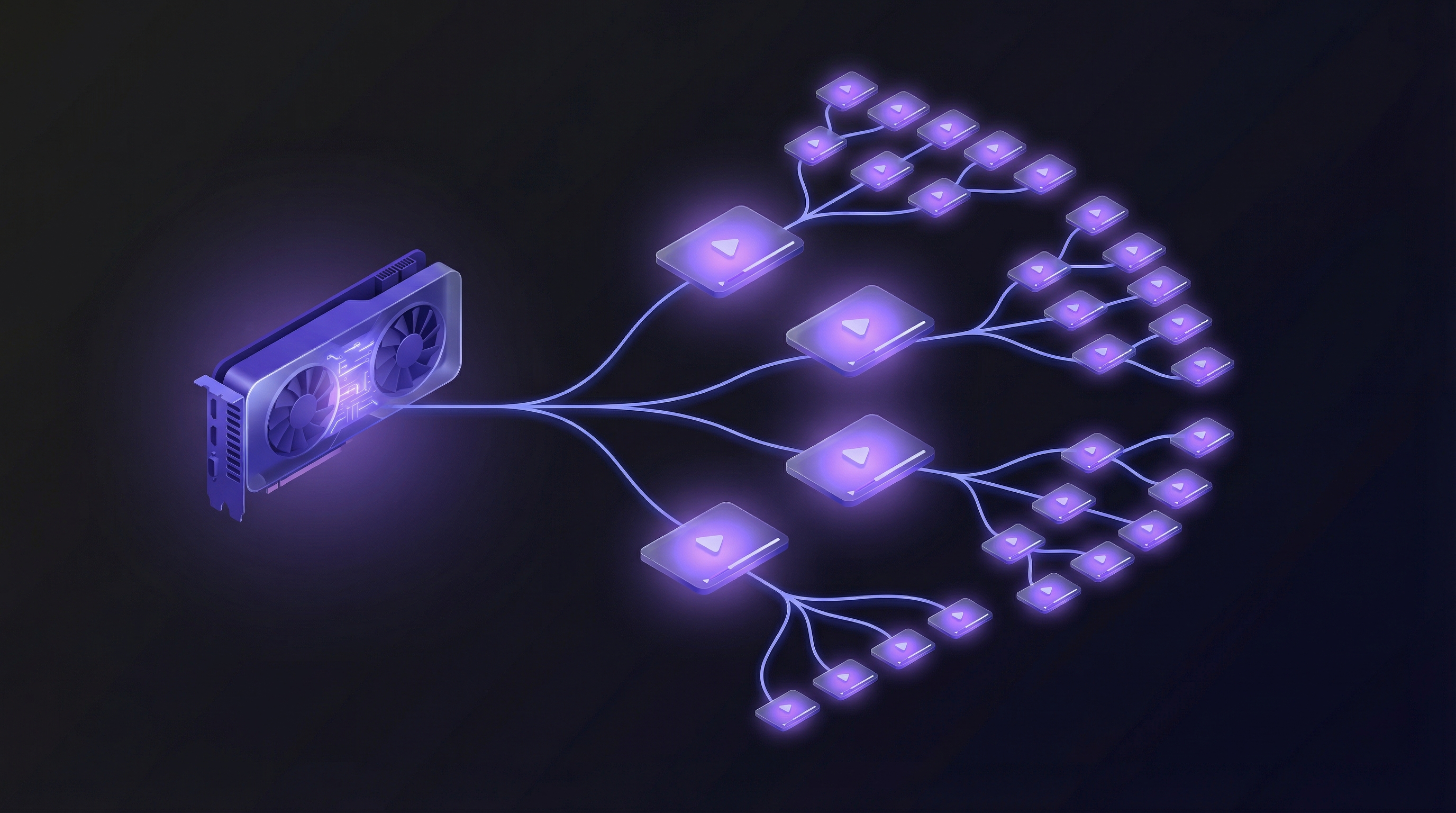
AI demo agents like Demosmith generate polished product walkthroughs autonomously. A prospect lands on a landing page, watches a two-minute video that shows the exact workflow relevant to their use case, and either converts to a trial or books a deeper conversation. No SE joined. No calendar invite was needed. The prospect either qualified themselves or disqualified themselves.
When the product ships a new feature, the demo updates in ten minutes. Not next quarter, not when someone remembers to re-record. Ten minutes. The demo automation tools that have emerged in the last two years have made this kind of continuous, low-friction demo production possible at a scale that was not viable before.
The before-and-after looks like this:
Before AI in the presales stack:
- SE joins every deal from the first demo request, qualified or not
- Builds custom demo data sets manually for each prospect
- Delivers the same core product walkthrough ten or more times per week
- Re-records demo videos every time the product ships a significant change
- Context switches between early-stage discovery and late-stage technical evaluations throughout the same day
After AI handles the early layer:
- Automated video demos qualify prospects before any SE joins a call
- AI generates persona-specific product walkthroughs without SE input
- Demos update automatically when the product changes
- SEs join deals that are already warmed, qualified, and ready for a technical conversation
- SE time concentrates on the work that actually requires technical depth
The goal is not to automate the SE out of the deal. It is to automate the SE out of the work that should not have required an SE in the first place.
What does the new presales stack look like?
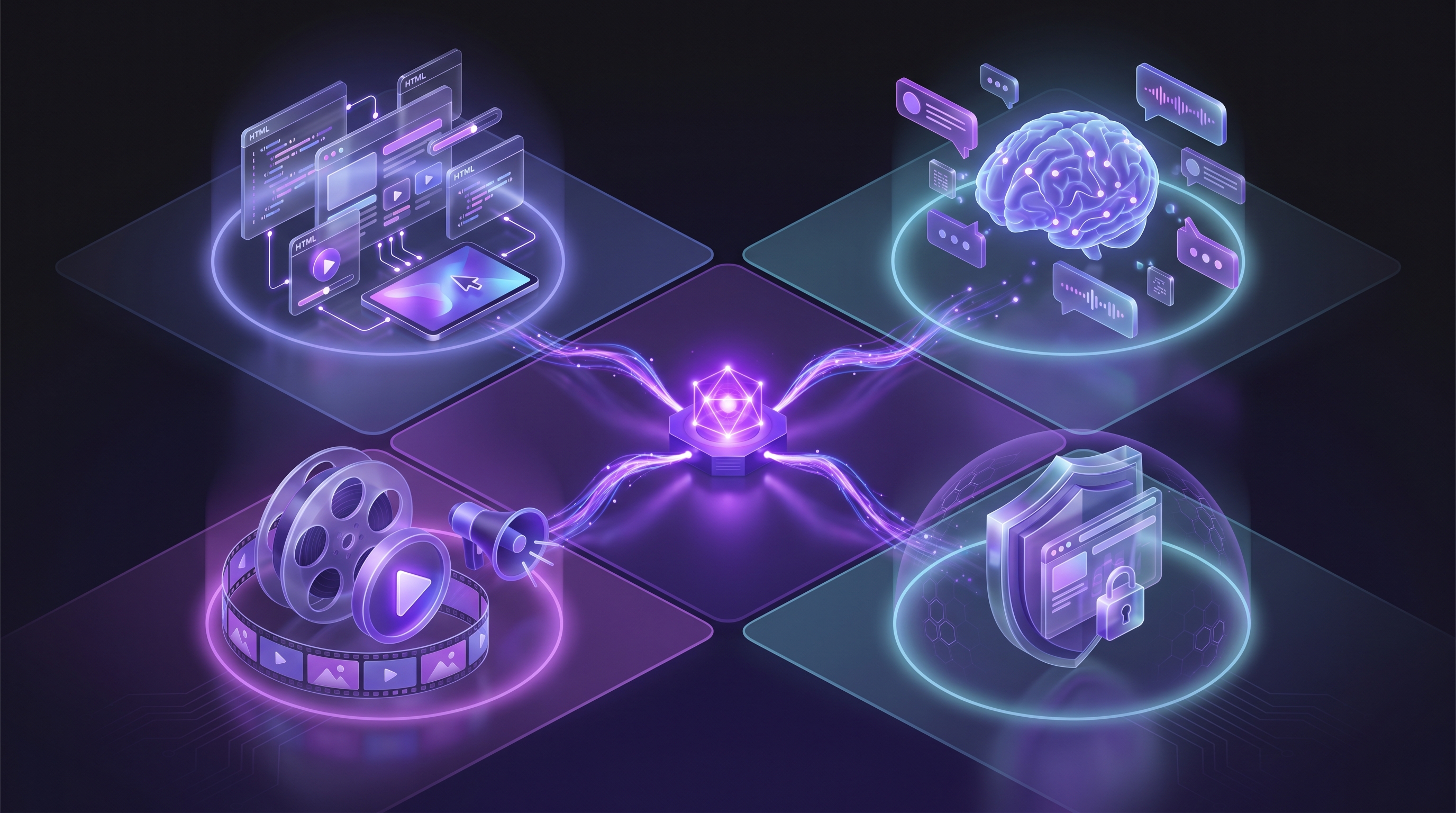
The stack that is emerging in 2026 has three distinct layers, and the SE operates differently in each.
Layer 1: Awareness and initial qualification (automated). AI-generated video demos run on landing pages, in cold outreach sequences, and as leave-behinds after initial contact, which is the essence of sending a demo before the first call. These handle the "what does this product do and is it relevant to me?" questions. Prospects who engage deeply signal genuine interest. Prospects who do not engage at all self-select out. No SE time required.
Layer 2: Consideration and evaluation (hybrid). Prospects who engage with top-of-funnel demos and request a deeper conversation get a discovery call with a rep, often supported by a more detailed automated demo tailored to their specific use case. The SE may join for fifteen minutes to handle a specific technical question, but does not own the entire call. This is where scaling product demo creation by persona and industry starts to pay off.
Layer 3: Technical evaluation and close (SE-led). For deals that progress past consideration, the SE takes full ownership. POC scoping, sandbox access, security reviews, integration architecture discussions, technical objection handling. This is the work that requires a human with deep product knowledge and the ability to improvise under pressure. AI does not replace this.
The ratio of SE time spent across these three layers is the real metric to watch. A presales team that is spending 60% of its hours in layer 1 is wasting capacity. A team running AI in layer 1 and concentrating SEs in layer 3 gets far more out of the same headcount.
Where do SEs still add irreplaceable value?
Worth saying clearly: the burnout conversation can slide toward a narrative that SEs are being automated away. They are not. The skills that make a great SE genuinely useful are worth more now, because AI handles the work that didn't need those skills in the first place.
What AI cannot replicate in presales:
- Live technical improvisation. When a prospect asks a question that was not in the demo script, the SE reads the room, pivots, and addresses the real concern. No video does this.
- Buying committee dynamics. Enterprise deals involve multiple stakeholders with different priorities. An SE who can read a room, address the security team's concern without losing the business buyer, and coach the champion on how to navigate internal approval is doing something AI cannot replicate.
- POC ownership. Proof of concept engagements require scoping, custom configuration, issue diagnosis, and ongoing technical support. These are high-judgment, high-relationship activities that determine whether a six-figure deal closes.
- Complex integration architecture. When a prospect needs to understand how your product fits into a specific tech stack, connects to their data warehouse, or interacts with their compliance requirements, an SE's ability to think through that architecture live is the differentiator.
- Trust at the technical level. Buyers of complex software often trust the SE more than the AE. The SE has no commission incentive. When the SE says "this will work for your use case," that statement carries different weight than anything in a demo video.
The presales role is concentrating. The repetitive, low-impact work is leaving. What remains is the work that actually closes enterprise deals.
How do you implement the AI layer in your presales workflow?
For teams looking to make this transition, the entry point is simpler than it sounds. You do not need to restructure the entire presales org on day one. Start with the top of the funnel.
The first step is identifying where SEs are currently spending time that should not require an SE. Common candidates: initial discovery demos to inbound leads who have not yet been qualified by a rep, repeat demos of the same core product flow, and demo updates when the product ships a new feature. These are the tasks that AI demo generation can absorb immediately.
The second step is generating video demos for the top three to five use cases your product addresses. A polished, two-minute walkthrough for each persona (built with a tool like Demosmith from a URL and a plain-English description) can replace a significant share of early-stage SE demo volume. Embed these on your pricing page, your outbound sequences, and your qualification flow.
The third step is measuring what changes. Track the ratio of SE demos delivered to qualified vs. unqualified prospects. Track SE hours by funnel stage. Track how close rates change when SEs enter deals later and more prepared. The data will tell you how much of the structural problem has been addressed and where to go next.
The broader principle behind demo-led growth is that the demo is not a sales event. It is a qualification and education tool that should run continuously, asynchronously, and at scale. AI makes that possible without requiring an SE for every instance. For a full breakdown of what this looks like across a range of tools, see the best AI demo video generators available in 2026.
Presales teams that deploy AI at the top of the funnel do not have fewer SEs. They have SEs who close more.
Frequently Asked Questions
What is presales automation?
Presales automation uses software to handle repetitive early-stage sales tasks that previously required a sales engineer, such as delivering product demos, answering qualification questions, and generating personalised walkthroughs. AI demo agents like Demosmith automate the video demo layer so SEs focus on late-stage technical work.
How is AI changing the sales engineer role?
AI handles the early-funnel demo work that previously consumed SE time: generating product walkthroughs, qualifying prospects through self-serve demos, and updating videos after UI changes. SEs are shifting into a higher-impact role focused on late-stage technical evaluation, POC support, and complex integrations.
Can AI replace a sales engineer?
No. AI handles repetitive, early-stage demo delivery. It cannot replace the technical judgement, relationship building, and live problem-solving an SE brings to complex deals. The goal is to free SEs from low-value demo work so they spend more time where they genuinely move deals forward.
What percentage of demos go to unqualified prospects?
According to the Consensus 2026 Sales Engineering Compensation and Workload Report, 37% of demos are delivered to prospects who are not yet qualified. This is one of the primary drivers of SE burnout, and why automated early-stage demos can improve team efficiency so sharply.
How do you reduce SE burnout in a fast-growing SaaS company?
The most effective lever is removing SEs from early-stage, unqualified demos. Deploying automated video demos at the top of the funnel qualifies prospects before SE involvement. This reduces the volume of low-value demos SEs deliver, cutting context switching and the repetitive demo fatigue that Presales Collective identifies as a silent crisis.
Key Takeaways
- 37% of demos go to unqualified prospects. Over 60% of SEs report demo fatigue. This is a structural problem, not a motivation one
- AI demo agents absorb early-stage demo delivery so SEs are not the default first touch for every inbound lead
- The new presales stack has three layers: automated early-stage, hybrid consideration, and SE-led technical evaluation
- SEs add irreplaceable value in live technical improvisation, buying committee navigation, POC ownership, and trust-building, none of which AI replicates
- The entry point is simple: generate video demos for your top three to five use cases and deploy them before the SE calendar invite goes out
- Presales teams that automate the early funnel do not shrink. They concentrate SE time on the work that actually closes deals