Interactive demo tools have become a core part of the SaaS product marketing stack. If you are evaluating options, three names keep coming up: Navattic, Storylane, and Arcade. All three let you build click-through product tours. But they approach the problem differently, price differently, and serve different teams.
Choosing the wrong one costs you months of setup, thousands in subscription fees, and a library of demos that may not fit your actual growth motion. This guide breaks down all three so you can pick the right one the first time.
One note on perspective: we make Demosmith. When this guide was first written, Demosmith produced video demos only, so we had no horse in the interactive race. That changed in September 2026, when Demosmith added interactive demos compiled from the same recordings. We have kept this comparison as neutral as we can: all three tools below are built by dedicated teams who do capture, editing, and analytics extremely well, and each still does things Demosmith does not.
Why this comparison matters
Interactive demos have moved from a nice-to-have to a standard part of the SaaS buying experience. Prospects expect to click through your product before they talk to sales. Marketing teams need demo content they can embed on landing pages, feature pages, and campaign assets. Sales teams want leave-behinds that work without a live walkthrough.
Three clear leaders have emerged in this space, each with a different philosophy. Navattic focuses on enterprise analytics and CRM integration. Storylane pioneered the concept of using interactive demos as SEO assets. Arcade prioritises design quality and speed of creation.
The differences between them are not cosmetic. They reflect fundamentally different views on what an interactive demo is for. Navattic treats demos as data instruments. Storylane treats demos as content assets. Arcade treats demos as design artifacts. Understanding those philosophies is the fastest way to figure out which one fits your team.
Choosing the wrong tool wastes more than money. It wastes the time your team spends building demos in a platform that does not match how you sell. And switching platforms later means rebuilding every demo from scratch.
Navattic: the enterprise data play
Navattic was founded in 2021 with a clear target: enterprise SaaS companies that need interactive demos integrated into their existing sales and marketing infrastructure. If your CRM is the center of your universe, Navattic was built for you.
How it works
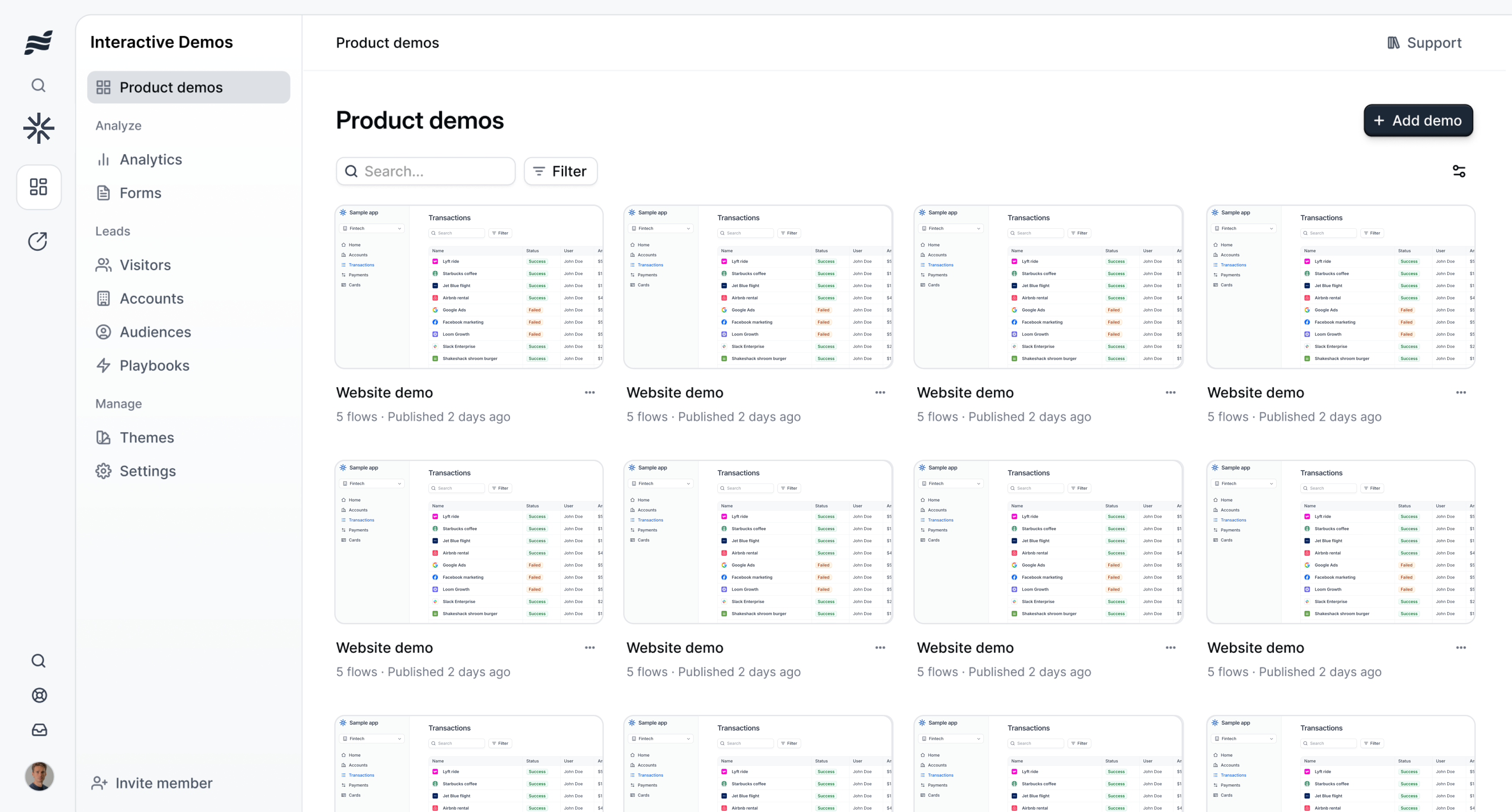
Navattic uses HTML/CSS capture to clone your product's UI. Instead of taking screenshots, it captures the actual front-end code and renders it as a click-through experience. This means the demo looks and feels like the real product, including fonts, animations, and responsive layouts. The result is a higher-fidelity experience than screenshot-based alternatives.
What it does best
Analytics and attribution. Navattic has published benchmarks from over 40,000 interactive demos, making it the most data-rich platform in the category. Its analytics go deep: account-level tracking, step-by-step engagement data, and native integrations with Salesforce and HubSpot that push demo engagement directly into your CRM records.
For enterprise PLG teams that need to show the board how demo engagement correlates with pipeline, Navattic provides the data layer that other tools lack. You can see which accounts viewed which demos, which steps they spent time on, and how that engagement maps to deal progression.
Pricing
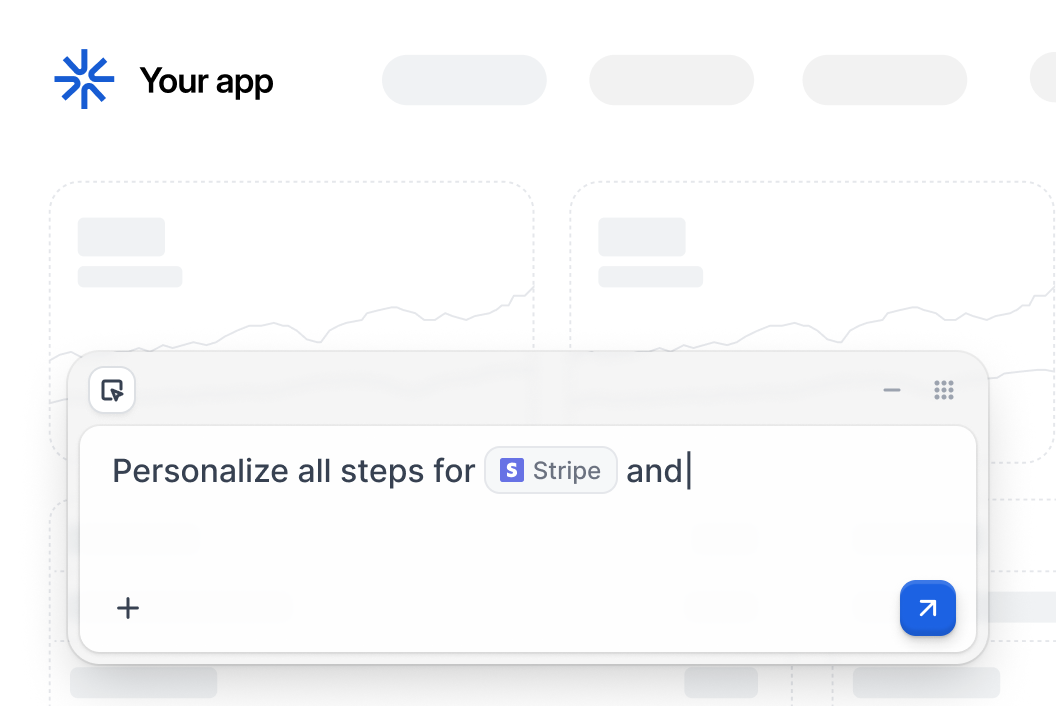
Navattic starts at approximately $6,000 per year on the Growth plan. Enterprise pricing is custom. There is no free tier and no publicly listed free trial. You need to request a demo to get started.
Who it is for
Enterprise PLG teams with average contract values above $50,000. Teams that need Salesforce attribution and account-level demo analytics. Companies where the buying committee includes multiple stakeholders and demo engagement data needs to flow into the CRM for sales follow-up.
Limitations
The price is the most obvious barrier. At $6,000 per year minimum, Navattic is not accessible to early-stage startups or small marketing teams. The learning curve is steeper than Storylane or Arcade, partly because of the depth of configuration options available. And like the other two tools on this list, Navattic does not produce video output. It creates interactive click-throughs only.
If you are exploring alternatives that include video output, we wrote a detailed breakdown of Navattic alternatives for demo videos.
Storylane: the demo-led SEO play
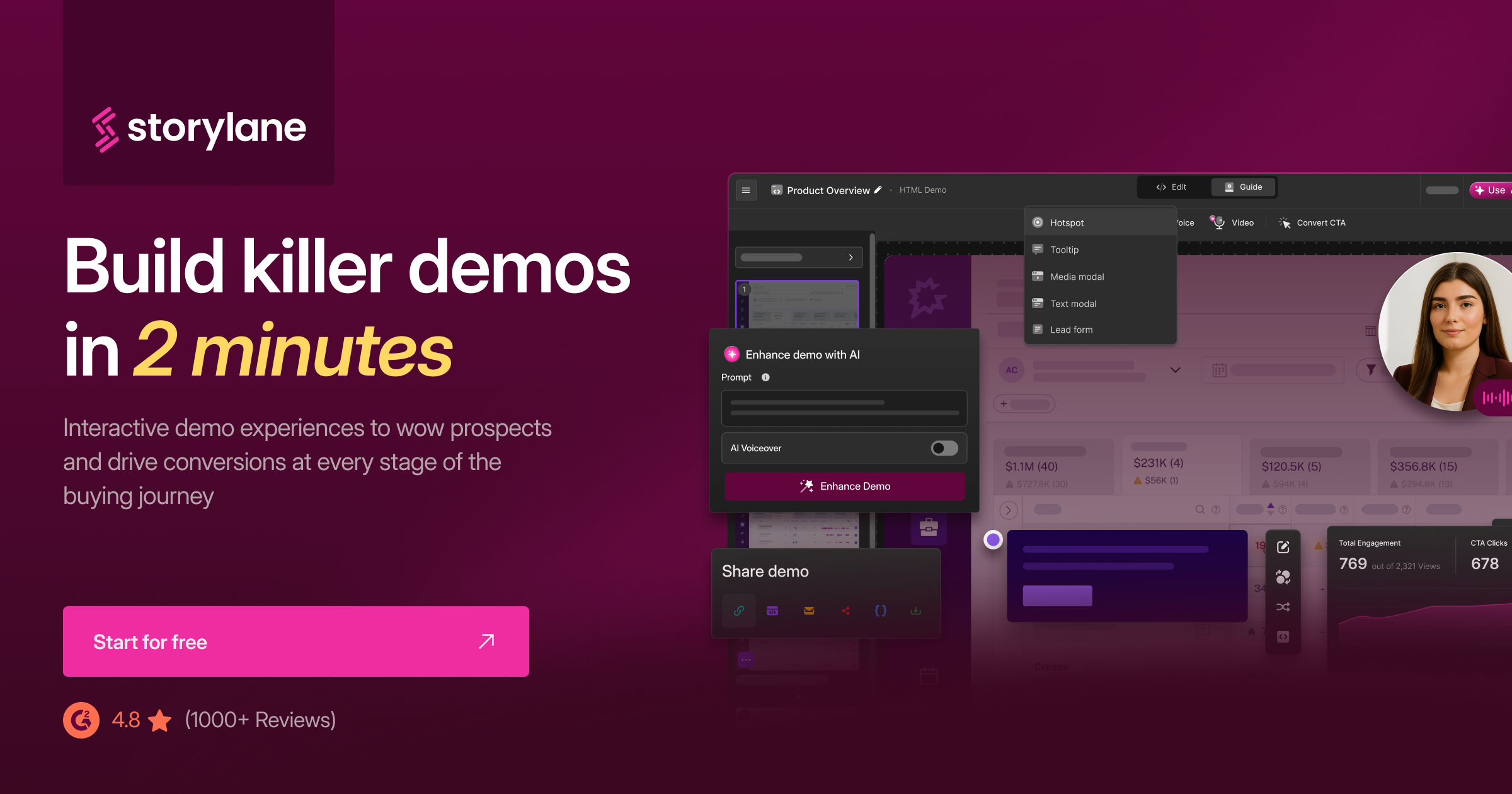
Storylane was also founded in 2021, but it took a different path. While Navattic went upmarket, Storylane focused on making interactive demos accessible to SMB and mid-market marketing teams. Its defining contribution to the category is the concept of "demo-led SEO": using interactive demos as indexable content that ranks on Google.
How it works
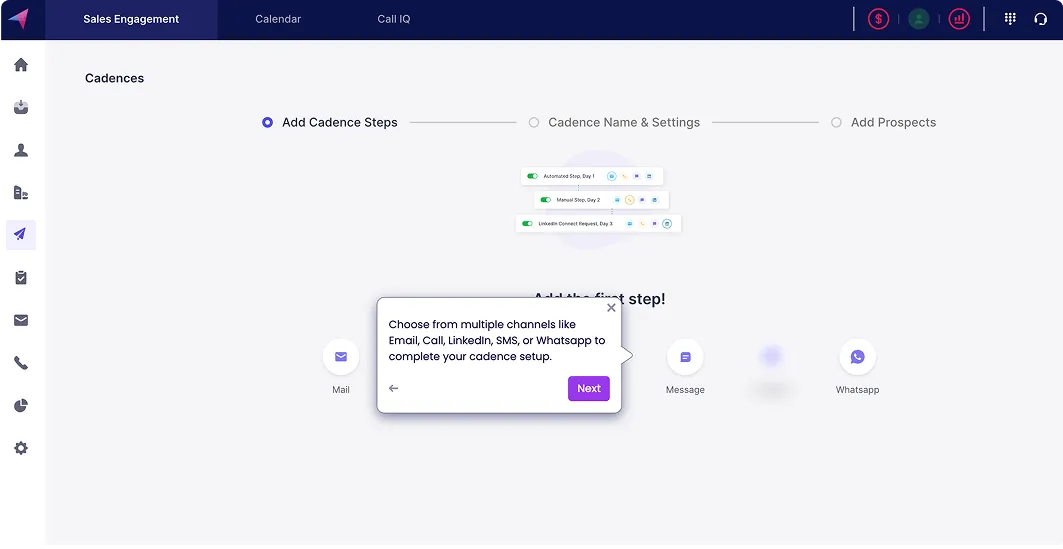
Storylane uses screenshot-based capture through a Chrome extension on its lower plans. You navigate through your product, the extension captures each screen, and you layer tooltips and hotspots on top. On higher plans, Storylane also offers HTML capture similar to Navattic. The screenshot approach is faster to set up but can look less crisp than HTML capture, especially on high-resolution displays.
What it does best
Demo-led SEO. Storylane pioneered the idea that interactive demos can serve as standalone content assets that rank in search engines. They claim over 7,000 interactive demos are being used as SEO assets on their platform, and report 6x growth in organic impressions for customers who adopt this strategy.
The concept is straightforward: instead of writing a blog post about a feature, you create an interactive demo of that feature and publish it as an indexable page. The demo provides a richer experience than a static article, which can improve engagement metrics and search rankings.
Beyond SEO, Storylane is simply easy to use. The setup process is fast, the interface is intuitive, and the free tier lets you experiment without commitment.
Pricing
Storylane offers a Solo free plan limited to one demo. Paid plans start at $40 per month (Starter), with Growth at $100 per month and Enterprise pricing custom. The free plan is genuinely useful for testing the platform before committing.
Who it is for
SMB and mid-market marketing teams. Content-driven growth teams that want to use demos as SEO assets. Companies with limited budget that need a free tier to experiment. Teams where the primary user is a marketer, not a sales engineer.
Limitations
Screenshot capture on lower plans can look pixelated or slightly off compared to the real product. Analytics are limited on Starter and Solo plans. Like Navattic and Arcade, Storylane does not produce video demos. And the demo-led SEO framework, while compelling, requires consistent content production to see meaningful results.
For teams that need video output alongside or instead of interactive demos, see our comparison of Storylane alternatives for demo videos.
Arcade: the design-forward play
Arcade was founded in 2022, entering the market a year after Navattic and Storylane. It differentiated by focusing on design quality and speed. If Navattic is the analytics tool and Storylane is the SEO tool, Arcade is the design tool.
How it works
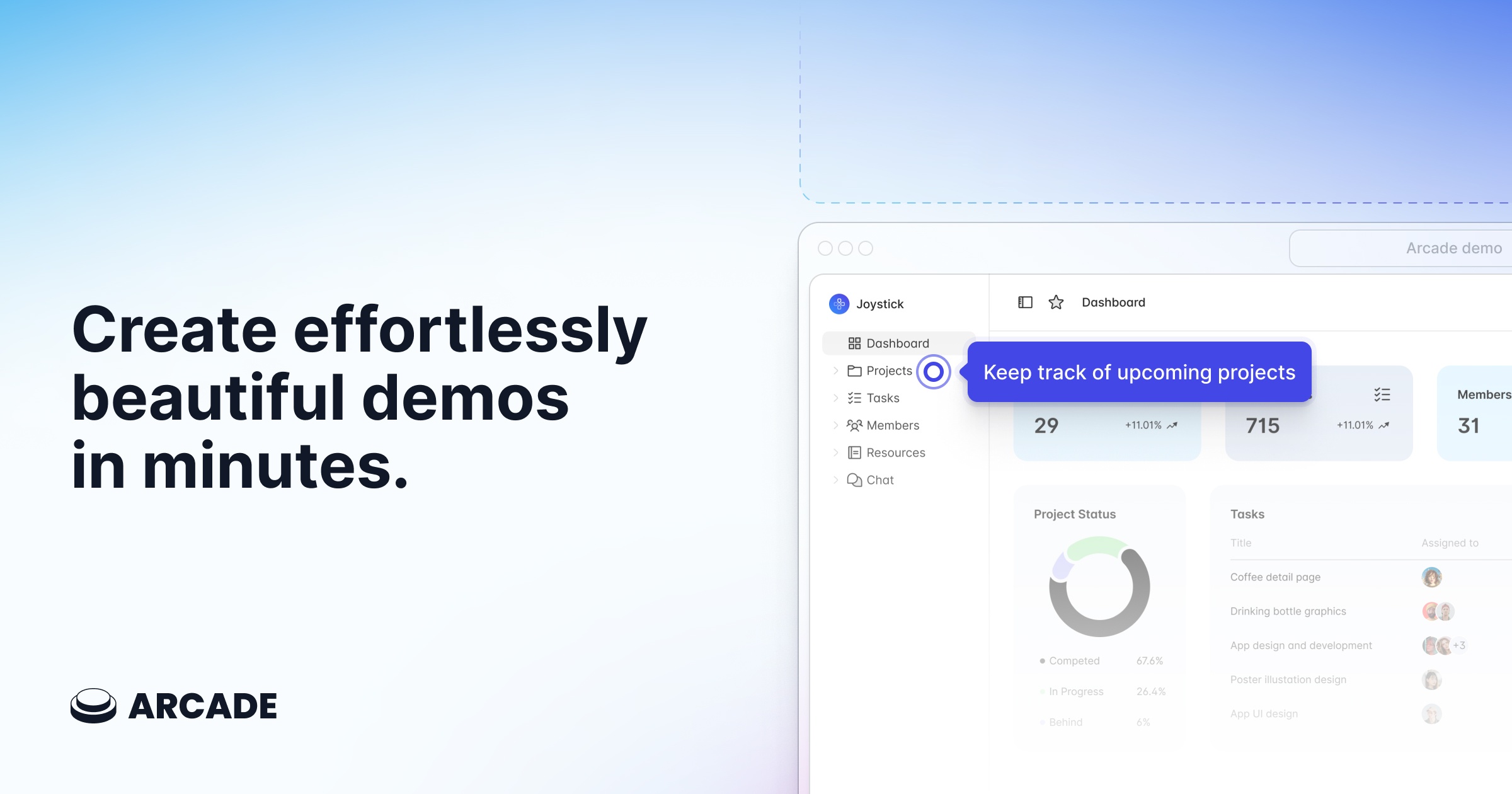
Arcade uses screenshot and GIF capture combined with a library of polished design elements: callouts, annotations, hotspots, and transitions. The focus is on making the output look beautiful without requiring design skills. You capture your screens, add Arcade's native design elements, and publish. The result looks closer to a polished marketing asset than a raw product screenshot.
What it does best
Speed and visual quality. Arcade is the fastest of the three tools to go from zero to published demo. A simple flow can be built in under 15 minutes. The native design elements (callouts, annotations, branded overlays) mean the output looks polished without involving a designer.
Arcade claims interactive demos built on their platform convert 7.2x better than video. That is their own data, not independently verified, so treat it as a reference point rather than a universal truth. What is clear is that Arcade's output is visually distinctive and well-suited for website embeds and product marketing pages.
Pricing
Arcade offers a free plan with up to 3 flows. Growth starts at $42 per month, Pro at $80 per month, and Enterprise pricing is custom. The free tier is more generous than Storylane's (3 flows vs. 1 demo), making it a good option for teams that want to test the format before committing.
Who it is for
Design-conscious product marketing teams. Small teams that need quick wins without a designer on staff. Companies that want polished, visually appealing demo content for their website and marketing campaigns. Teams that prioritise speed of creation over analytics depth.
Limitations
Arcade is screenshot-only. There is no HTML capture option, which means the interactive experience is less realistic than Navattic or Storylane's higher plans. Video export is limited to a GIF-like format, not a full MP4 with voiceover. And the analytics are less sophisticated than Navattic's enterprise-grade tracking. For teams that need deep CRM attribution or account-level engagement data, Arcade may feel lightweight.
If you need full video output rather than GIF-like exports, our guide to Arcade alternatives for demo videos covers the options.
Head-to-head comparison
Here is how the three tools stack up across the dimensions that matter most.
| Navattic | Storylane | Arcade | |
|---|---|---|---|
| Capture Method | HTML/CSS | Screenshot + HTML on higher plans | Screenshot/GIF |
| Free Tier | No | Yes (1 demo) | Yes (3 flows) |
| Starting Price | ~$500/mo | $40/mo | $42/mo |
| Enterprise Pricing | Custom | Custom | Custom |
| CRM Integration | Salesforce, HubSpot (native) | HubSpot, Salesforce | Limited |
| Analytics Depth | Deep, account-level | Moderate | Basic |
| Video Export | No | No | Limited (GIF-like) |
| SEO Optimization | Moderate | Strong (demo-led SEO) | Moderate |
| Best For | Enterprise PLG | SMB/mid-market marketing | Design-conscious teams |
| Time to First Demo | Hours | 30-60 minutes | Under 15 minutes |
The table makes the trade-offs clear. Navattic offers the most depth but at the highest cost and longest setup time. Arcade offers the fastest path to a published demo but with the least analytical power. Storylane sits in the middle on most dimensions, with a standout strength in SEO.
Which tool fits which team
Rather than declaring a single winner, here is a decision framework based on your specific situation.
Choose Navattic if:
- You sell to enterprise buyers with average contract values above $50,000
- You need Salesforce or HubSpot attribution at the account level
- Deep demo analytics are a requirement, not a nice-to-have
- You have budget for $6,000 or more per year
- Your sales process involves multiple stakeholders who need to interact with the demo independently
Choose Storylane if:
- You are an SMB or mid-market company
- You want to use interactive demos as SEO content assets
- You need a free tier to experiment before committing budget
- Your primary demo creator is a marketer, not a sales engineer
- You want a balance of ease-of-use and functionality without enterprise pricing
Choose Arcade if:
- Visual design quality is a top priority for your brand
- You need something fast and simple that your team can adopt in a day
- You have a small team without dedicated design resources
- You want polished output for website embeds and marketing campaigns
- Speed of creation matters more than depth of analytics
All three are good products. There is no objectively wrong choice here. The right tool is the one that matches how your team actually works and how your buyers actually buy. A $10M ARR enterprise SaaS company and a seed-stage startup with 5 employees have completely different needs, and that is fine.
The missing piece: none of them produce video
There is one gap that all three tools share: none of them produce video demos. Navattic creates interactive click-throughs. Storylane creates interactive click-throughs. Arcade creates interactive click-throughs with a limited GIF-like export. But none of them output a finished MP4 with voiceover, captions, and branding.
This is not a flaw in these tools. Interactive demos and video demos are different products that serve different purposes. Interactive demos work on your website and in environments where users can click through an embedded experience. Video demos work everywhere else: outbound sales emails, LinkedIn posts, YouTube, support documentation, onboarding sequences, internal training, and partner enablement. Those are the channels where Demosmith fits each team's workflow, from sales enablement through customer support.
You cannot embed an interactive demo in a cold email. You cannot post a click-through tour on LinkedIn. You cannot include an interactive experience in a help article that a customer reads on their phone. For all of these use cases, you need video. For a deeper look at how these two formats complement each other, see our guide on interactive demos vs. video demos.
This is why the most effective demo strategies use both formats: an interactive demo tool for on-site product tours and a video tool for everything else.
AI demo agents like Demosmith fill the video gap. You paste your product URL, describe the flow you want to demonstrate, and the AI agent navigates your product, records the workflow, adds voiceover in any of 29 languages, applies captions and branding, and delivers a finished MP4 in under 10 minutes. No recording. No editing. No voiceover sessions. Pricing starts at $40 per month with a free trial and no credit card required.
Since September 2026, the recommended stack has gotten simpler: Demosmith alone covers both formats, because it compiles interactive tours from the same recordings that produce its videos. If you are choosing among Navattic, Storylane, and Arcade for deeper interactive needs (CRM attribution, SEO content engines, design-heavy tours), pair one with Demosmith. If you mainly need website tours plus video for every other channel, Demosmith can now do both jobs from one recording, and our interactive demos launch post covers exactly how that works. For a broader look at the AI video tool landscape, see our roundup of the best AI demo video generators.
The best demo strategy is not interactive or video. It is interactive and video, each deployed where it creates the most value.
Conclusion
Navattic, Storylane, and Arcade each have a different philosophy about what interactive demos should do. Navattic is the data platform for enterprise teams that need CRM attribution and account-level analytics. Storylane is the content platform for marketing teams that want to turn demos into SEO assets. Arcade is the design platform for teams that want beautiful output fast.
The right choice depends on your stage, your budget, and your growth motion. Not on which tool has the longest feature list. A startup spending $40 per month on Storylane or Arcade can get more value than an enterprise team spending $6,000 per year on Navattic if the cheaper tool matches how they actually sell.
If you need video output alongside interactive demos, see our Demosmith vs Navattic comparison and Navattic Review 2026. And regardless of which interactive demo tool you choose, add video to your demo strategy. Interactive click-throughs cover your website. Video covers everything else. The two formats are complementary, and the teams that use both will outperform the teams that rely on just one.
Pick the interactive tool that fits your team. Then add video to cover the channels that click-throughs cannot reach.
To see how these three stack up against the wider field of ten interactive demo tools, including Supademo, Guideflow, Walnut, and TestBox, see our roundup of the best interactive demo software in 2026.
Key Takeaways
- Navattic is built for enterprise teams that need deep analytics and CRM integration, starting at roughly $6,000 per year
- Storylane is built for SMB and mid-market teams that want to use demos as SEO content, with a free tier and plans from $40 per month
- Arcade is built for design-conscious teams that need polished output fast, with a free tier and plans from $42 per month
- All three tools produce interactive click-throughs only. None produce video demos with voiceover and branding
- The strongest demo strategy combines an interactive tool for website embeds with a video tool for outbound, social, and support
- AI demo agents can generate finished video demos in minutes, closing the gap that interactive tools leave open. See our guide to the best AI demo video generators in 2026 for a full comparison